





The mortgage is a keystone in most property transactions. Technically, it’s a loan secured by a property as a part of the property’s own conveyance. So why make a new term up for the thing when the word “loan” already exists? Why complicate things? Mortgages have been around for a long time, a really long time. Way back into Ancient Greece, there are examples of lenders using land as collateral, and to mark the lender’s territory, a large stone called a “horos” or “opoi” would be prominently placed on the property. It was basically a physical version of the deed record, clearly showing anyone who walked onto the land that there was a lender who was owed their due and the land would cover it if the debtor couldn’t. [image below is of a Greecian mortgage stone]
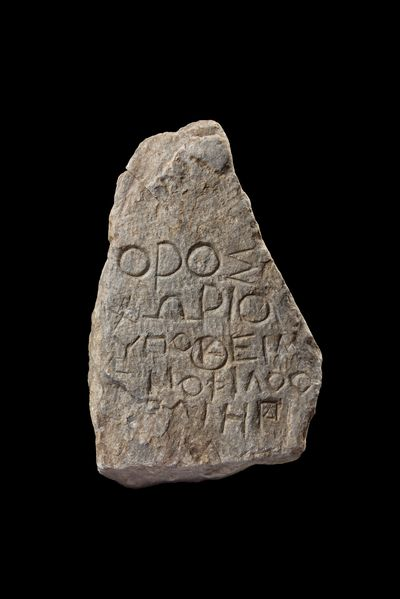
There are stories about ancient Greek papyrus scrolls that carried the deed and were held by third parties for safekeeping, but none of those scrolls survived the last 3 millennia. The stone therefore was a very real and actual form of recording the loan document and giving public notice of the loan. When the loan was paid, the stone was removed and the land was unencumbered by the debt. It wasn’t a classic mortgage, but the tracings of the modern system can be found in those rocks.
The more modern system of mortgages and the term “mortgage” itself comes from old Roman laws. In Rome, there were three types of loans that were permitted:
- Fiducia – trust loans, where the lender retained both ownership and possession of the object of the loan until it was fully paid off, basically the ancient version of a layaway arrangement
- Pignus – pawn loans, where the borrower retained ownership of the object, but the lender kept possession until the debt was paid
- Hypotheca – pledge loans, where the borrower had both ownership and possession of the item until the debt was paid, leaving the loan little more than a hypothetical concept supported by law.
As Roman law was integrated into northern Europe, the British adopted and evolved additional terms to secure and collateralize loans, known as “Vadium.”
- Vivum Vadium – “living pledges” where real estate is temporarily pledged to the lender to pay off a debt, where the lender could collect the debts through collecting income off the land [but nothing else]. For all intents and purposes, it was permitting the lender to take their recompense from the land without taking possession of the land. The land then “worked” off the loan and was not forfeited. Eventually, a Vivum Vadium would be repaid through the natural production of the property.
- Mortuum Vadium – “dead pledges” where the land was given/pledged to the lender and would only return to the debtor if they paid the debt off in full. In effect, the land was dead to the debtor for the entire period of the pledge because it generated no income for them. Many debtors would remain able to possess the land, but the income faucets from farming, hunting, and businesses on the land were shut off while a Mortumm Vadium was in place. It was essentially the ultimate form of collateralization, where the debtor was risking the total ownership of the property. Failure to pay off the dead pledge would see total forfeiture of the property to the lender.
After the French took over England in the 1060s, French was introduced into the lexicon and Mortuum Vadium became “mort gaige,” and eventually became “mortgage” as a single word. For the first 600 years of mortgages, the lender could demand payment at any time and if the borrower couldn’t pay back their mortgaged land, they lost it. In the early 1600s, the concept of rights of redemption were introduced into law and a borrower would be given a chance to “redeem” or pay off a mortgage when the creditor called it due.
The next 400 years of history saw the mortgage process become more proceduralized and equitable. Refinancing was made possible, payments were made more periodic and on longer timescales, foreclosure was systematized and built into the law, eventually the lender allowed the borrower to even accrue equity in the property as they paid into the loan [until the mid 1900s, homeowners paid about a 50% down payment and made interest payments only, then made one giant balloon payment at the end of the short loan period, accruing zero equity beyond the down payment until the balloon], but the core of it was still the same — if you fail to pay the dead pledge, you lose the land to the lender.